Product Design

20+ years across national and multinational companies, government, publishers and SME / startups. Experienced as a Senior, Principal or a Lead role. Strategic product design and development. Problem-solving & impact-driven.

Case

Detailed
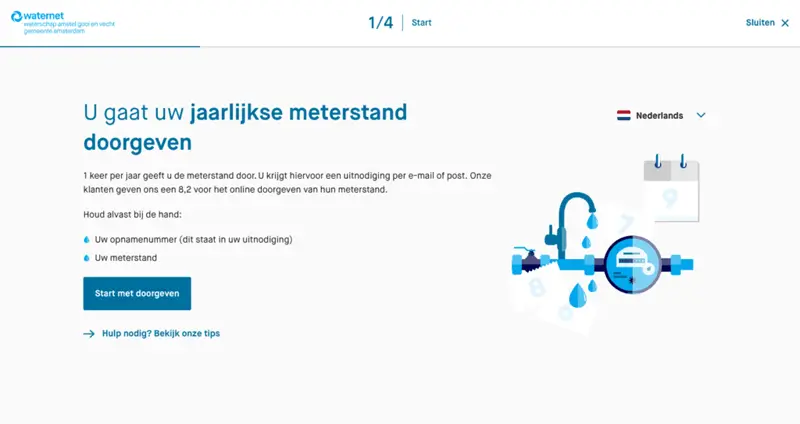
Waternet
Waternet Amsterdam
Waternet Amsterdam detail
 
Waternet Amsterdam detail
Case
  • ▪ Industry / Branch
  • Semi-Government / Water Management
  • ▪ Organisation
  • Waternet Amsterdam
  • ▪ Services
  • Product Design Development · UX Engineering · Web Development · Accessibility · Usability

Challenge
  • ▪ Organisation
  • Waternet is the public water authority responsible for clean drinking water, wastewater treatment, and surface water management for Amsterdam and the surrounding region.
    As a semi-government entity, its digital services are essential for both residents and businesses.
  • ▪ The Challenge
  • The existing Waternet website required a targeted update to enhance user experience and usability. While the core functionality was almost in place, the interface had become difficult to navigate, particularly for common tasks like reporting issues, checking water quality, and managing account details.
    The challenge was to implement meaningful improvements - subtle yet impactful, while maintaining the reliability expected of a critical public utility.

Role
  • ▪ Role summary
  • With extensive experience in managing major governmental projects, I was hired as a Product Design Developer and UX Engineer within the project team.
    My responsibilities included identifying usability friction points, implementing engineering solutions to enhance user experience, and ensuring that the updated interfaces and workflows adhered to rigorous accessibility standards.
  • ▪ Team
  • I worked closely with Waternet's internal stakeholders, designers, developers, testers and managers to deliver an efficient digital experience for all users of Amsterdam.

Research
  • ▪ Usability audit
  • A focused audit of the existing website was conducted to identify specific pain points. Key areas of friction included complex form structures for reporting leaks or water issues, unclear navigation labels, and inconsistent mobile responsiveness across core service pages.
  • ▪ Analysis
  • The most frequent user tasks were mapped: paying water bills, updating address details, reporting street-level water issues, and accessing water quality information. The analysis confirmed that these critical paths were burdened by unnecessary steps and dated interface patterns.
  • ▪ Goal
    1. - Streamline the User Experience and Interface for core citizen tasks without requiring a full platform rebuild.
    2. - Enhance mobile usability for on-the-go access to service information.
    3. - Ensure that Interface improvements comply with the Dutch government's Accessibility requirements.

Target
  • ▪ Struggle
  • Amsterdam residents and business owners accessing Waternet's digital services faced unnecessary complexity. Reporting a simple issue like a leak or finding water hardness data required navigating multiple pages without clear end.
    On mobile devices, the experience was particularly frustrating, with the flow and forms that were difficult to complete.
  • ▪ Expectation
  • As a public utility, users expect the same clarity and ease of use they experience with modern commercial services.
    Information should be findable within seconds, and tasks should be completable with minimal cognitive load, regardless of the device being used.
Persona
  • ▪ The Amsterdam Resident
    • Role: Homeowner or tenant in Amsterdam
    • Goal: Pay water bills, report a street leak, or check water quality quickly.
    • Pain Point: Confusing navigation and forms that feel like bureaucratic hurdles.
    • Quote: "I just want to report this leak and get on with my day."
  • ▪ The Small Business Owner
    • Role: Café or restaurant owner in the Amsterdam region
    • Goal: Manage water usage accounts and understand commercial tariffs efficiently.
    • Pain Point: Time wasted navigating an unclear site structure to find business-specific information.
    • Quote: "Time I spend figuring out this website is time away from my business."

Features
  • ▪ Improvements
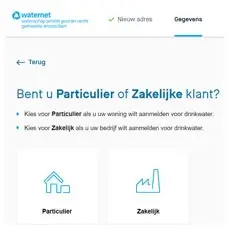
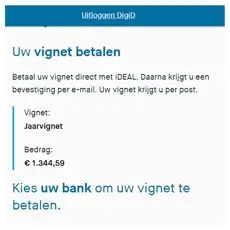
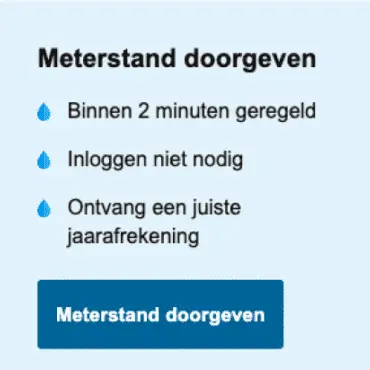
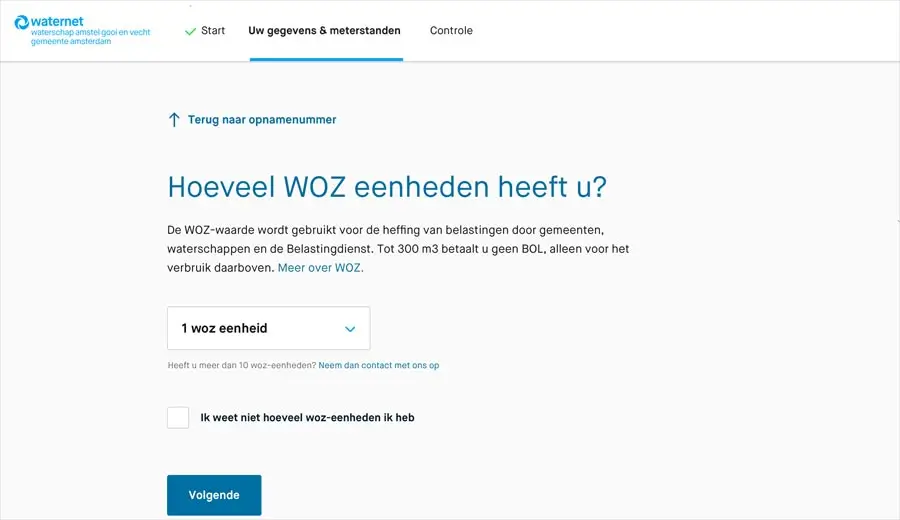
  • The update focused on high-impact, targeted tweaks rather than a complete visual overhaul. Navigation labels were clarified, form fields were simplified and grouped logically, white-space corrected and key service entry points were made more prominent on the homepage.
  • ▪ Mobile-first
  • Given the high volume of mobile users, particular attention was paid to responsive behavior. I enlarged the touch targets, form inputs were optimized for mobile keyboards, and critical service information was restructured for easy scanning on smaller screens.
  • ▪ Accessibility
  • Accessibility compliance was treated as a core requirement. Adjustments included improved focus states for keyboard navigation, enhanced color contrast for readability, and proper semantic markup to support screen reader users navigating forms and service updates.

Validation
  • ▪ Iterative refinement
  • I implemented UX/UI related front-end improvements in iterative cycles, allowing for continuous review with Waternet stakeholders. Each tweak was tested against the core user tasks identified during discovery to ensure measurable improvements in task completion speed and clarity.
  • ▪ Stakeholder alignment
  • Close collaboration with Waternet's internal team ensured that all updates remained aligned with the organization's communication standards and regulatory obligations, particularly regarding data privacy and service information accuracy.

Final
  • ▪ Enhancement
  • The redesigned Waternet website offers a streamlined and intuitive user experience. Navigation flows and multi-step forms are now less daunting, making it easier for residents to complete tasks efficiently.
    Core services are accessible with fewer clicks, saving time and reducing frustration.
    The mobile experience has been significantly enhanced, providing a user-friendly interface that ensures residents can effortlessly interact with their water authority anywhere - whether at home or on the go.
Improvements
  • ▪ Streamlined
  • Restructured information architecture with clearer labels and reduced clutter on high-traffic service pages.
  • ▪ Enhanced mobile usability
  • Responsive refinements across forms and service portals, significantly improving the on-the-go user experience.
  • ▪ Accessibility compliance
  • Front-end updates aligned with WCAG guidelines, ensuring equitable access for all citizens.

Results
  • ▪ Impact
  • The targeted UX and usability updates resulted in a more efficient digital service for Waternet's users. The streamlined interface reduced friction for common citizen tasks, and the accessibility enhancements ensured the platform better served the entire Amsterdam community.
  • ▪ Takeaways
    • - Incremental improvements yield significant impact: Meaningful enhancements can be achieved without a full redesign, especially in public sector contexts.
    • - Usability is a public service metric: For semi-government utilities, the ease of completing a task online directly correlates with citizen satisfaction and trust.
    • - Mobile is the front door: A smooth mobile experience is essential for residents reporting issues or accessing information in real-world contexts.

Go to Cases


Contact

& get in Touch

aalleexxxxwwoorrkkss..ppaaggeess..ddeevv
aalleexxxxwwoorrkkss@@pprroottoonn..mmee
++3311((00))662200551199557722